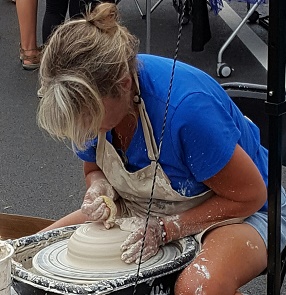
Wheel Throwing: A Practical Overview for the Studio Potter
From centring stiff stoneware to pulling thin-walled cylinders — a step-by-step look at the mechanics behind wheel-thrown forms.
Read article →A reference on studio pottery practices, handbuilt forms, and the regional kiln communities that have shaped Canadian ceramic craft since the mid-twentieth century.
Detailed coverage of throwing, firing, and finishing techniques used by studio potters across Canadian provinces.
From centring stiff stoneware to pulling thin-walled cylinders — a step-by-step look at the mechanics behind wheel-thrown forms.
Read article →
How extended wood firings of 24–72 hours produce ash-glaze effects that no electric kiln can replicate — and the logistics behind a community firing event.
Read article →A plain-language introduction to Seger formulas, unity molecular formulas, and the line-blend test — the foundation of any studio glaze notebook.
Read article →Pottery collectives and shared-kiln spaces have operated across Canadian provinces for decades. Salt-fire traditions in British Columbia, reduction stoneware in the Maritimes, and raku studios in Quebec each carry distinct regional character tied to local clay bodies and fuel sources.
Firing TechniquesThree aspects of ceramic practice that every studio potter encounters, regardless of their primary method or fired temperature range.
Choosing a clay body — grogged stoneware, smooth porcelain, or earthenware — determines firing temperature, shrinkage rate, and the surfaces a glaze can achieve.
The relationship between a bowl's wall thickness, its foot-ring height, and the feel of its lip on the lip is the conversation at the centre of functional studio pottery.
Oxidation, reduction, and neutral atmospheres produce fundamentally different surfaces from the same glaze. Understanding kiln atmosphere is as important as the recipe itself.
All articles on kiln culture, throwing techniques, and glaze chemistry are freely available. No accounts, no subscriptions.
About KilnMarket